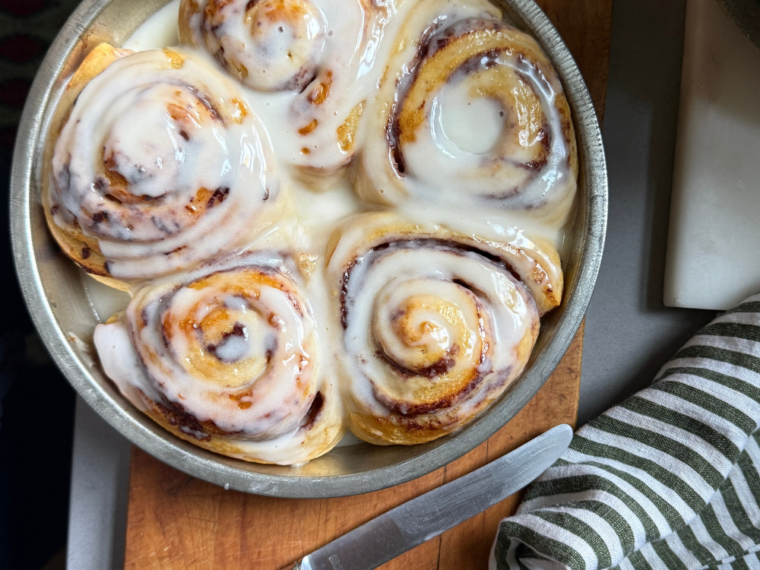
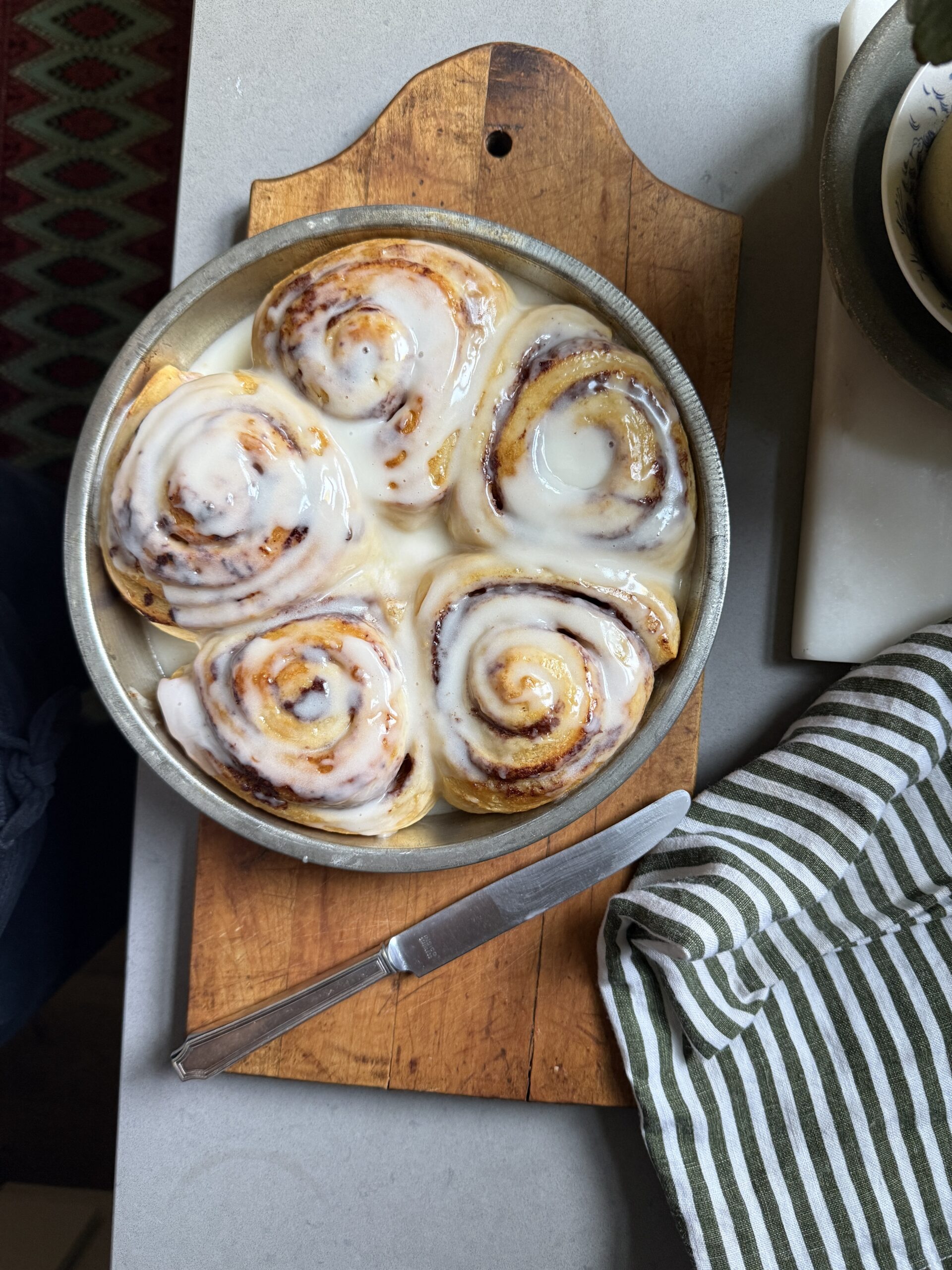
There are certain recipes that are worth making from scratch, and a pan of warm homemade cinnamon rolls is one of them. These are the big, soft, yeasty cinnamon rolls I think of when I imagine a really good cinnamon roll: tall and fluffy, swirled with buttery cinnamon sugar and finished with plenty of cream cheese icing while they’re still warm.
This isn’t a biscuit-style cinnamon roll or a shortcut recipe using canned dough. We’re making a true yeast dough here, which gives the rolls that pillowy, pull-apart texture you expect from a big bakery-style cinnamon roll. They take a little more time than popping open a can, but most of that time is simply letting the dough rise. I love these for a slow weekend morning, brunch or Christmas morning when breakfast itself gets to be part of the occasion.
What Makes the Best Cinnamon Roll?
For me, the best cinnamon roll has to be soft all the way through. I don’t want a dry outer edge with one good bite hiding in the center. The dough should be tender and fluffy, the cinnamon filling should run through every layer, and there should be enough icing to melt down into the warm rolls.
The secret is starting with a soft yeast dough enriched with whole milk, butter and egg. The dough should feel soft and slightly tacky rather than stiff or dry. That moisture is part of what gives you the fluffy texture we’re after.
And don’t rush the rise. Giving yeast dough enough time to become properly puffy is one of the biggest differences between a dense homemade cinnamon roll and a big, soft bakery-style one.

Description
The best cinnamon roll recipe for big, soft and fluffy homemade cinnamon rolls filled with buttery cinnamon sugar and topped with cream cheese icing.
Ingredients
For the Cinnamon Roll Dough
- ¾ cup whole milk, warmed
- 2¼ teaspoons active dry yeast (1 packet)
- ¼ cup granulated sugar, divided
- 1 large egg, room temperature
- ¼ cup unsalted butter, melted and slightly cooled
- 2¾ cups all-purpose flour, plus a little more only if needed
- ½ teaspoon kosher salt
For the Cinnamon Sugar Filling
- ½ cup unsalted butter, very soft
- ¾ cup packed light brown sugar
- 1½ tablespoons ground cinnamon
- Pinch of kosher salt
For the Cream Cheese Icing
- 4 ounces cream cheese, softened
- ¼ cup unsalted butter, softened
- 1 cup confectioners’ sugar
- 1 teaspoon pure vanilla extract
- 1 to 2 tablespoons whole milk or heavy cream
- Pinch of kosher salt
Instructions
Pour the warm milk into the bowl of a stand mixer or a large mixing bowl. The milk should feel pleasantly warm, but not hot, about 105 to 110°F if you’re checking it with a thermometer.
Sprinkle the yeast and about 1 tablespoon of the granulated sugar over the warm milk. Stir gently and let it sit for 5 to 10 minutes, until the mixture begins to look creamy and foamy.
If your yeast doesn’t show any activity, it’s better to start over with fresh yeast rather than continue with a dough that may never rise.
Add the remaining sugar, egg and melted butter to the yeast mixture and stir to combine.
Add the flour and salt. Using the dough hook attachment, mix on low until a shaggy dough forms. Increase to medium-low and knead for about 6 to 8 minutes, until the dough becomes smooth and elastic.
The most important thing here is not to add too much flour. The dough should be soft and slightly tacky, not dry or stiff. If it’s sticking slightly to the bottom of the mixing bowl, that’s fine.
If the dough is truly wet and difficult to handle after kneading, add additional flour just 1 tablespoon at a time.
If you’re making the dough by hand, turn it onto a lightly floured surface and knead for approximately 8 to 10 minutes.
Place the dough in a lightly buttered bowl and turn it once so the surface is lightly coated. Cover with a clean kitchen towel or plastic wrap and place somewhere warm and draft-free.
Let the dough rise for approximately 60 to 90 minutes, or until it has roughly doubled in size.
The temperature of your kitchen makes a big difference with yeast dough, so don’t worry if yours needs a little more time. Watch the dough rather than relying solely on the clock.
While the dough rises, combine the brown sugar, cinnamon and a pinch of kosher salt in a small bowl.
Keep the butter separate and let it become very soft. You want it soft enough to spread easily without tearing the dough.
I prefer softened butter here rather than melted butter because it stays in place as you roll the dough and helps keep all that cinnamon-sugar filling tucked inside.
Turn the risen dough onto a lightly floured work surface. Gently roll it into a rectangle approximately 12 x 16 inches.
Spread the softened butter evenly across the dough, leaving about a ½-inch border along one of the long edges.
Sprinkle the brown sugar and cinnamon mixture evenly over the butter and gently press it into the surface.
Starting at the opposite long edge, roll the dough into a snug log. Don’t pull or roll it excessively tight. Pinch the seam gently to seal.
Use a sharp serrated knife or a piece of unflavored dental floss to divide the log into 8 equal cinnamon rolls.
Arrange the rolls cut-side up in a generously buttered 9 x 13-inch baking dish, leaving a little room between them. They will expand considerably during the second rise and again in the oven.
Cover the baking dish loosely and allow the rolls to rise for another 30 to 45 minutes, or until they’re noticeably puffy and beginning to expand toward one another.
If your kitchen is particularly cool, this may take closer to an hour.
Meanwhile, preheat the oven to 350°F.
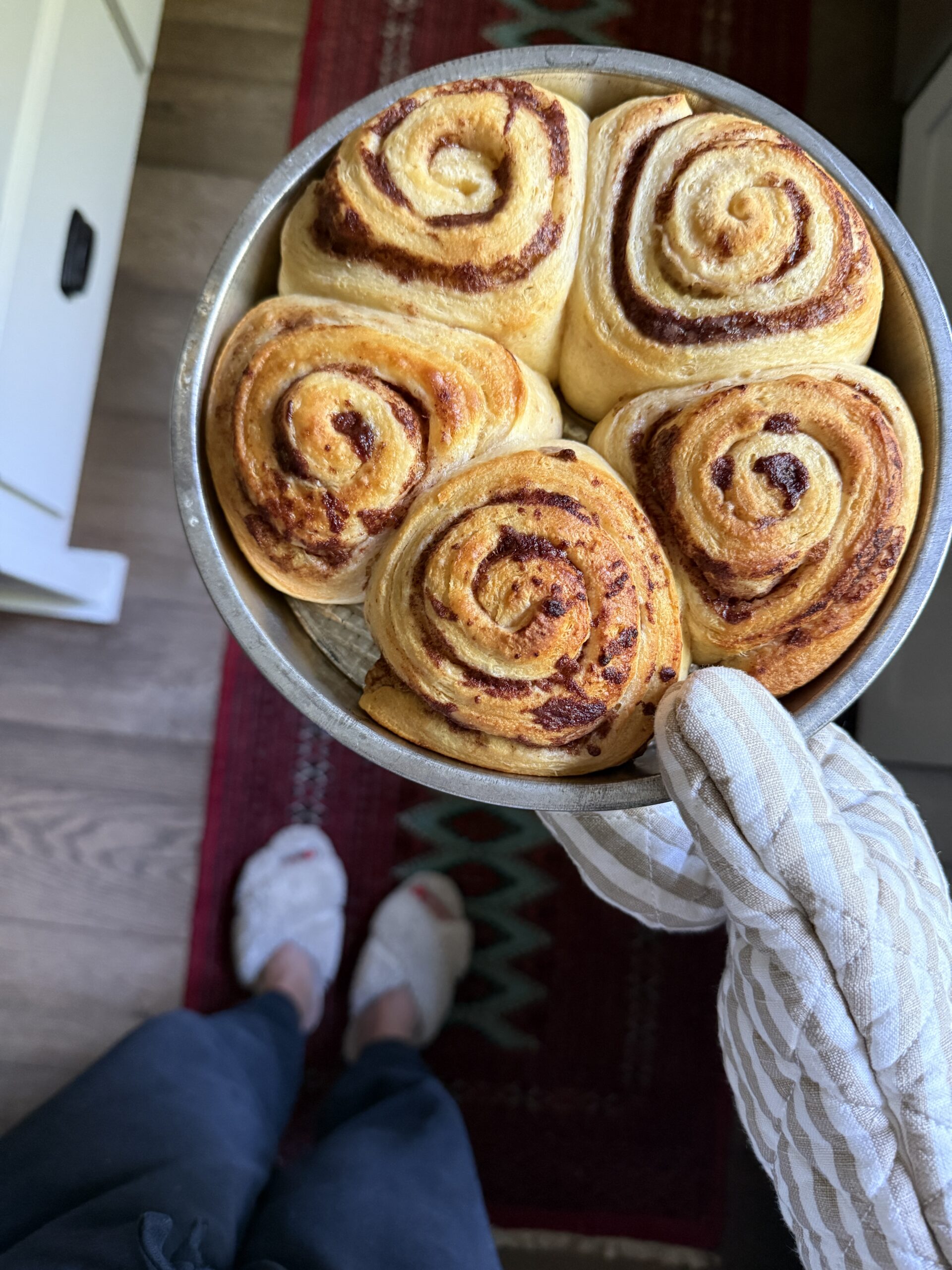
Bake the cinnamon rolls at 350°F for approximately 22 to 27 minutes, until they’re puffed, set in the centers and lightly golden on top.
Don’t wait for them to become deeply browned. One of the easiest ways to lose that wonderfully soft cinnamon-roll texture is simply to leave them in the oven too long.
Let the rolls cool in the pan for about 10 minutes while you make the icing.
Beat the softened cream cheese and butter together until smooth and creamy. Add the confectioners’ sugar, vanilla and a pinch of salt and beat again until smooth.
Add milk or heavy cream 1 tablespoon at a time until the icing reaches a thick but easily spreadable consistency.
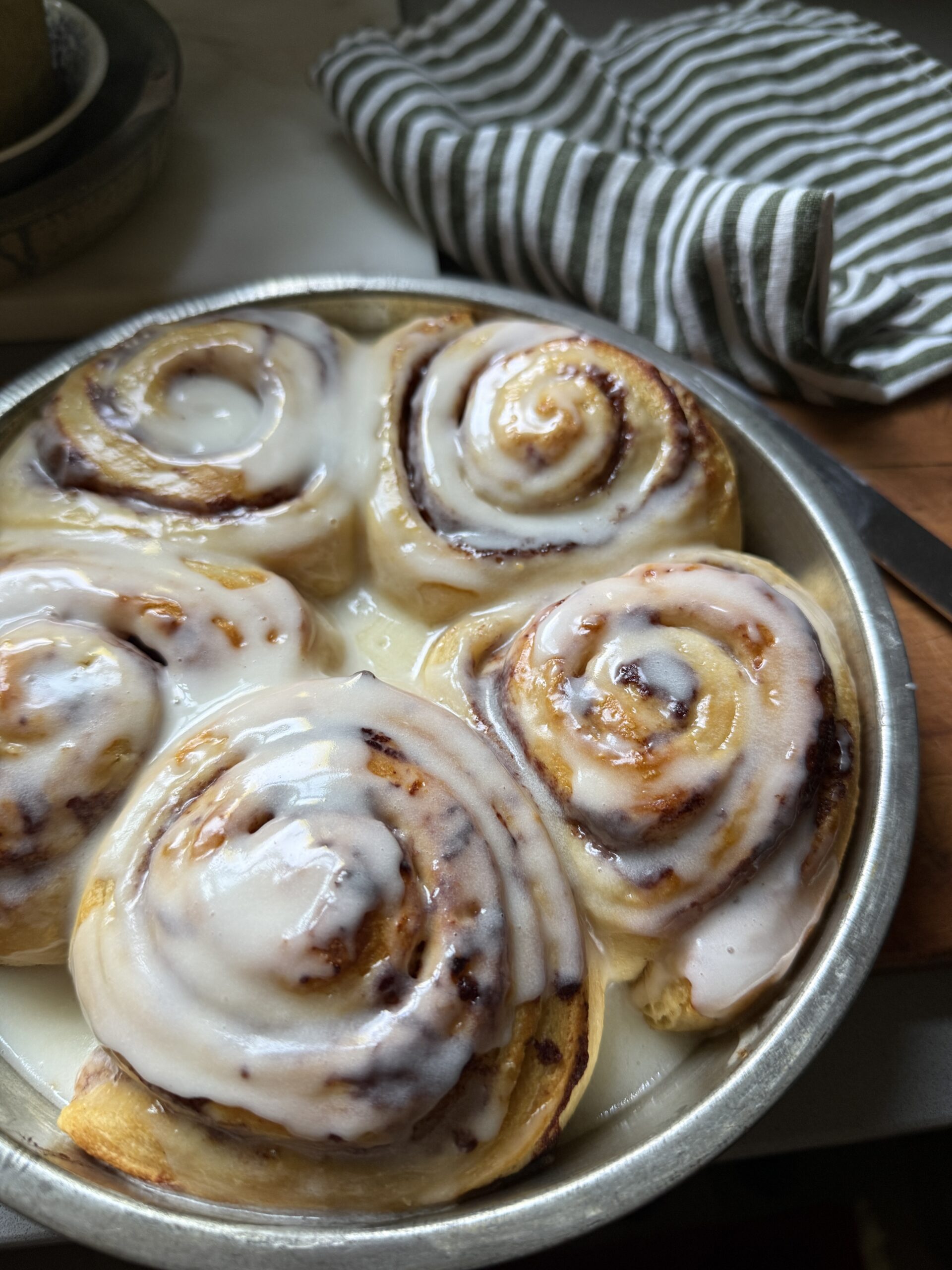
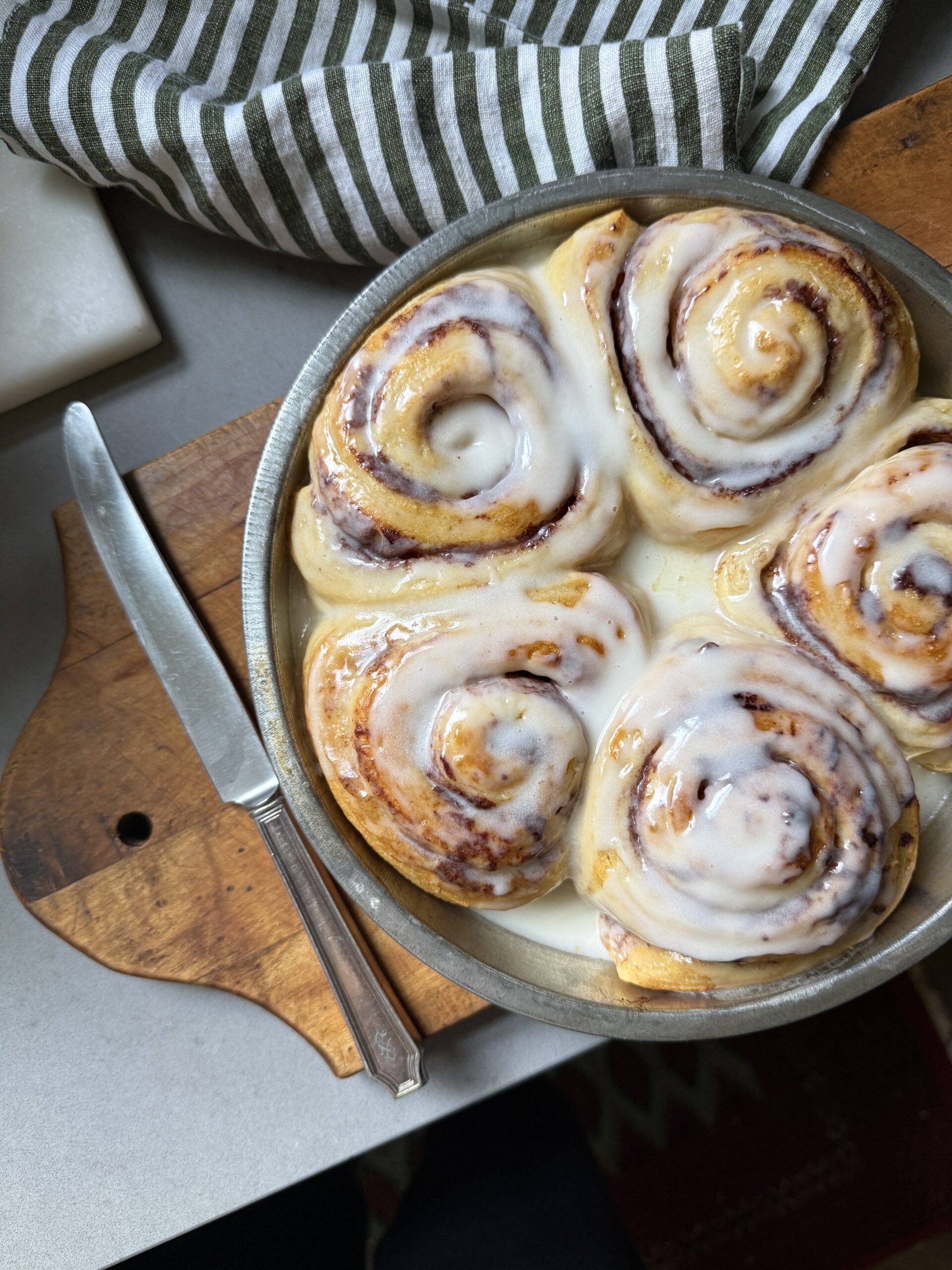
Spread the cream cheese icing generously over the cinnamon rolls while they’re still warm. The icing should soften and melt slightly into all those cinnamon-sugar spirals while still leaving plenty on top.
Serve warm.
Homemade Cinnamon Rolls with Cream Cheese Icing
Yield: 8 large cinnamon rolls
Prep Time: 30 minutes
Rise Time: About 1½ to 2 hours
Bake Time: About 22 to 27 minutes
Total Time: About 2½ to 3 hours
Ingredients
For the Cinnamon Roll Dough
- ¾ cup whole milk, warmed
- 2¼ teaspoons active dry yeast (1 packet)
- ¼ cup granulated sugar, divided
- 1 large egg, room temperature
- ¼ cup unsalted butter, melted and slightly cooled
- 2¾ cups all-purpose flour, plus a little more only if needed
- ½ teaspoon kosher salt
For the Cinnamon Sugar Filling
- ½ cup unsalted butter, very soft
- ¾ cup packed light brown sugar
- 1½ tablespoons ground cinnamon
- Pinch of kosher salt
For the Cream Cheese Icing
- 4 ounces cream cheese, softened
- ¼ cup unsalted butter, softened
- 1 cup confectioners’ sugar
- 1 teaspoon pure vanilla extract
- 1 to 2 tablespoons whole milk or heavy cream
- Pinch of kosher salt
How to Make Homemade Cinnamon Rolls
1. Activate the Yeast
Pour the warm milk into the bowl of a stand mixer or a large mixing bowl. The milk should feel pleasantly warm, but not hot, about 105 to 110°F if you’re checking it with a thermometer.
Sprinkle the yeast and about 1 tablespoon of the granulated sugar over the warm milk. Stir gently and let it sit for 5 to 10 minutes, until the mixture begins to look creamy and foamy.
If your yeast doesn’t show any activity, it’s better to start over with fresh yeast rather than continue with a dough that may never rise.
2. Make the Cinnamon Roll Dough
Add the remaining sugar, egg and melted butter to the yeast mixture and stir to combine.
Add the flour and salt. Using the dough hook attachment, mix on low until a shaggy dough forms. Increase to medium-low and knead for about 6 to 8 minutes, until the dough becomes smooth and elastic.
The most important thing here is not to add too much flour. The dough should be soft and slightly tacky, not dry or stiff. If it’s sticking slightly to the bottom of the mixing bowl, that’s fine.
If the dough is truly wet and difficult to handle after kneading, add additional flour just 1 tablespoon at a time.
If you’re making the dough by hand, turn it onto a lightly floured surface and knead for approximately 8 to 10 minutes.
3. Let the Dough Rise
Place the dough in a lightly buttered bowl and turn it once so the surface is lightly coated. Cover with a clean kitchen towel or plastic wrap and place somewhere warm and draft-free.
Let the dough rise for approximately 60 to 90 minutes, or until it has roughly doubled in size.
The temperature of your kitchen makes a big difference with yeast dough, so don’t worry if yours needs a little more time. Watch the dough rather than relying solely on the clock.
4. Make the Cinnamon Sugar Filling
While the dough rises, combine the brown sugar, cinnamon and a pinch of kosher salt in a small bowl.
Keep the butter separate and let it become very soft. You want it soft enough to spread easily without tearing the dough.
I prefer softened butter here rather than melted butter because it stays in place as you roll the dough and helps keep all that cinnamon-sugar filling tucked inside.
5. Roll and Fill the Dough
Turn the risen dough onto a lightly floured work surface. Gently roll it into a rectangle approximately 12 x 16 inches.
Spread the softened butter evenly across the dough, leaving about a ½-inch border along one of the long edges.
Sprinkle the brown sugar and cinnamon mixture evenly over the butter and gently press it into the surface.
Starting at the opposite long edge, roll the dough into a snug log. Don’t pull or roll it excessively tight. Pinch the seam gently to seal.
6. Cut the Cinnamon Rolls
Use a sharp serrated knife or a piece of unflavored dental floss to divide the log into 8 equal cinnamon rolls.
Arrange the rolls cut-side up in a generously buttered 9 x 13-inch baking dish, leaving a little room between them. They will expand considerably during the second rise and again in the oven.
7. Let the Cinnamon Rolls Rise Again
Cover the baking dish loosely and allow the rolls to rise for another 30 to 45 minutes, or until they’re noticeably puffy and beginning to expand toward one another.
If your kitchen is particularly cool, this may take closer to an hour.
Meanwhile, preheat the oven to 350°F.
8. Bake
Bake the cinnamon rolls at 350°F for approximately 22 to 27 minutes, until they’re puffed, set in the centers and lightly golden on top.
Don’t wait for them to become deeply browned. One of the easiest ways to lose that wonderfully soft cinnamon-roll texture is simply to leave them in the oven too long.
Let the rolls cool in the pan for about 10 minutes while you make the icing.
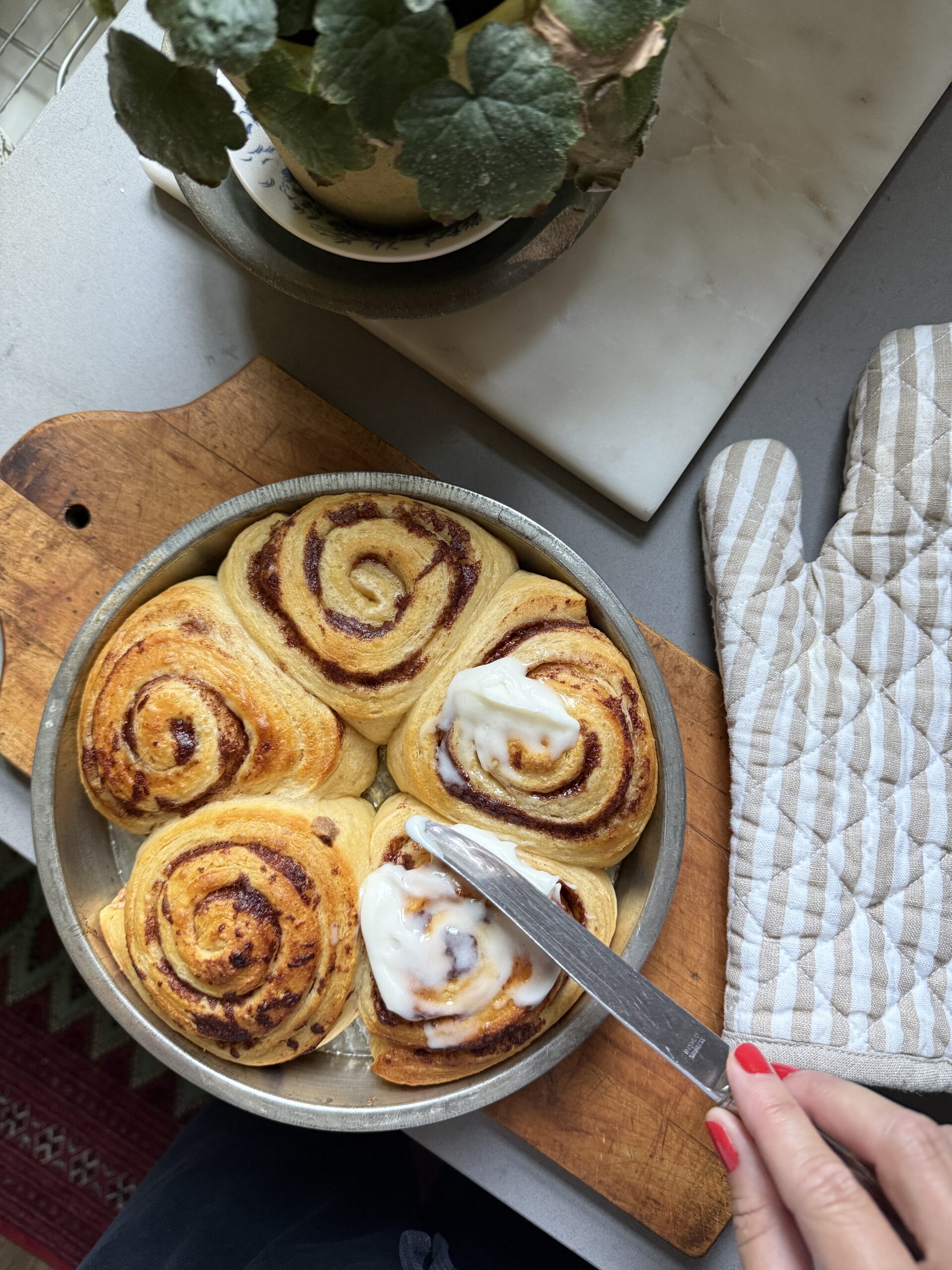
How to Make Cream Cheese Icing
Beat the softened cream cheese and butter together until smooth and creamy. Add the confectioners’ sugar, vanilla and a pinch of salt and beat again until smooth.
Add milk or heavy cream 1 tablespoon at a time until the icing reaches a thick but easily spreadable consistency.
Spread the cream cheese icing generously over the cinnamon rolls while they’re still warm. The icing should soften and melt slightly into all those cinnamon-sugar spirals while still leaving plenty on top.
Serve warm.
How to Make Big, Fluffy Cinnamon Rolls
If you’re after those big bakery-style cinnamon rolls with tall spirals and soft centers, there are a few things that make a real difference.
First, don’t add too much flour. When measuring flour, spoon it lightly into your measuring cup and level the top rather than digging the measuring cup directly into the flour bag. Packing too much flour into the dough is one of the easiest ways to end up with a dense cinnamon roll.
Your finished dough should also be soft and slightly tacky. Don’t keep adding flour simply because you’re expecting it to feel like a dry bread dough.
Second, give both rises enough time. You’re looking for a noticeably expanded, puffy dough rather than an exact number of minutes.
Finally, don’t overbake them. Pull the rolls when they’re cooked through and lightly golden rather than waiting for a dark golden-brown top. King Arthur similarly cautions against overbaking soft cinnamon rolls because it compromises that pillowy texture.
Can I Make Cinnamon Rolls the Night Before?
Yes, and this is one of my favorite ways to make cinnamon rolls for Christmas morning or brunch.
Prepare the recipe through the shaping step and arrange the rolls in the baking dish. Instead of allowing them to complete their second rise, cover the pan tightly and place it in the refrigerator overnight.
The next morning, remove the cinnamon rolls from the refrigerator and let them sit at room temperature until they’ve lost their refrigerator chill and become noticeably puffy, generally about 45 to 75 minutes depending on the temperature of your kitchen.
Then bake at 350°F as directed.
You can make the cream cheese icing the night before, too. Keep it covered in the refrigerator and allow it to soften while the cinnamon rolls bake.
Why Didn’t My Cinnamon Rolls Rise?
Start with the yeast. Make sure it hasn’t expired and that the milk wasn’t too hot when you added it. Warm liquid encourages the yeast, but overly hot milk can damage it.
The temperature of your kitchen also matters. Yeast dough rises much more slowly in a cold kitchen. If your dough hasn’t doubled after an hour, it doesn’t necessarily mean anything has gone wrong. Give it more time.
Why Are My Homemade Cinnamon Rolls Dry?
Usually, it’s one of two things: too much flour or too much time in the oven.
Don’t pack your measuring cup with flour. Spoon the flour gently into the cup and level it across the top.
And don’t try to make the dough completely dry by adding more flour. A slightly tacky dough is exactly what you want for a soft cinnamon roll. King Arthur likewise recommends starting with a somewhat sticky dough when softness is the goal.
What Is the Best Cinnamon for Cinnamon Rolls?
Because cinnamon is the star of the filling, fresh, good-quality ground cinnamon makes a noticeable difference.
Regular ground cinnamon works beautifully, so there’s no need to make this complicated. What matters more is that your cinnamon is fresh and fragrant rather than a jar that’s been sitting in the back of the spice cabinet for years.
How Do You Keep Cinnamon Rolls Soft?
Cinnamon rolls are best on the day they’re baked, especially when they’re still slightly warm. Keep leftovers tightly covered so the exposed dough doesn’t dry out.
Because these are topped with cream cheese icing, refrigerate leftovers you’re keeping longer. Warm an individual roll gently before serving to soften the dough, filling and icing again.
Can You Freeze Homemade Cinnamon Rolls?
Yes. Let the baked cinnamon rolls cool completely before wrapping them tightly and freezing.
I prefer freezing them without the cream cheese icing when possible. Thaw and gently warm the rolls, then add fresh icing before serving.
You can also freeze individual rolls rather than the entire batch, which makes it easy to pull out just one or two at a time.
What to Serve with Homemade Cinnamon Rolls
A big homemade cinnamon roll doesn’t need much alongside it. Coffee and fresh fruit are usually enough for me.
For Christmas morning or a larger brunch, add something savory like soft scrambled eggs, bacon or sausage along with a bowl of fresh fruit. It balances the sweetness and turns the cinnamon rolls into a full breakfast.
A Christmas Morning Tradition
Cinnamon rolls are one of those recipes particularly suited to becoming a family tradition. There’s something about the smell of yeast dough, butter and cinnamon coming from the kitchen that seems to pull everyone into the room.
That’s also why I love the overnight method. Most of the work happens the evening before, and in the morning you can put a pan of big homemade cinnamon rolls into the oven without covering the kitchen in flour before anyone has had coffee.
Those are the recipes worth keeping, the ones everyone eventually begins to expect because you’ve made them year after year.
Things Worth Keeping
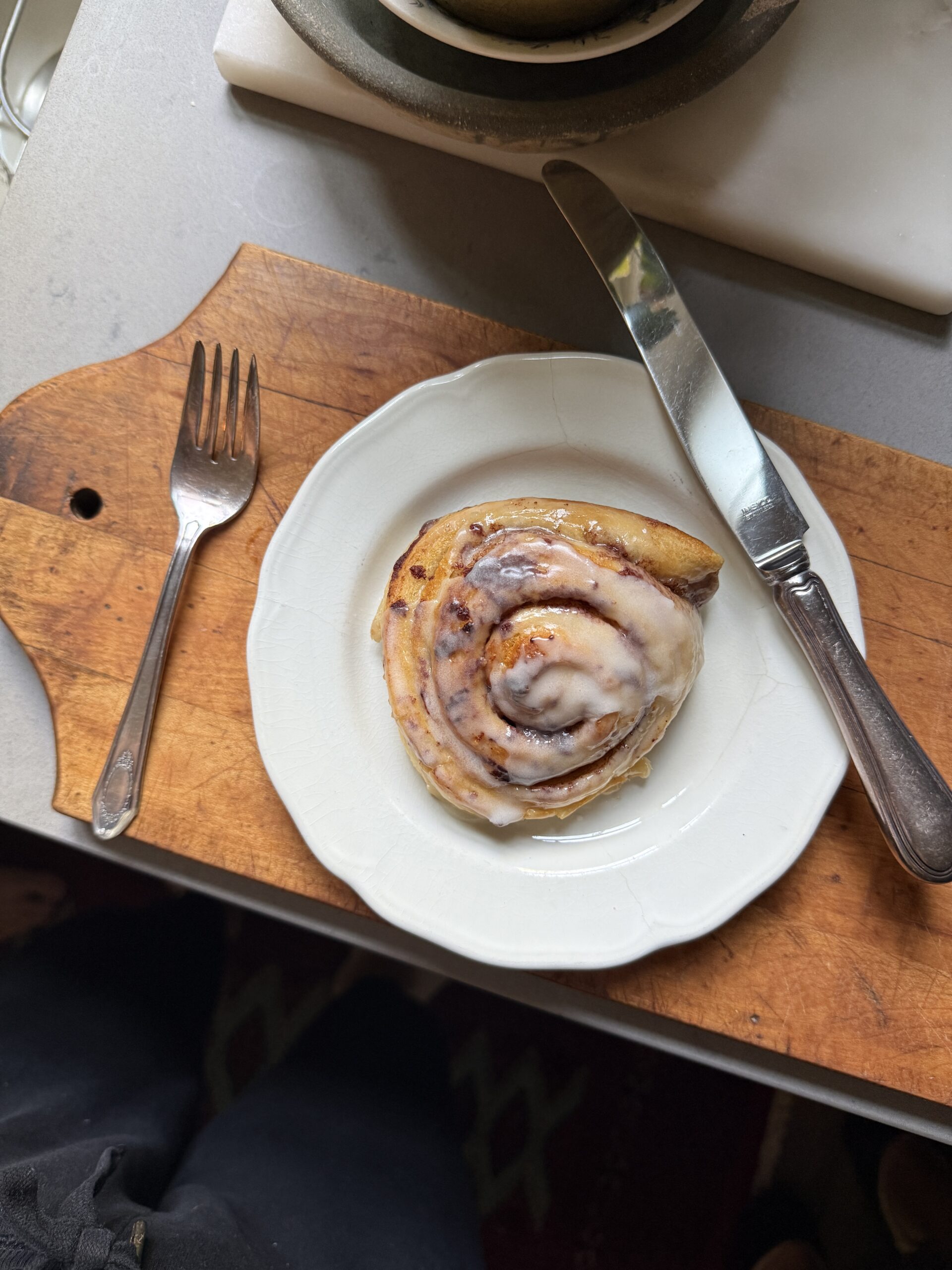
There will always be mornings when opening a can of cinnamon rolls is exactly what needs to happen. But knowing how to make the real thing from scratch feels like one of those old-fashioned kitchen skills worth keeping around.
A soft yeast dough, plenty of cinnamon and brown sugar, and cream cheese icing melting into a still-warm roll isn’t complicated food. It simply takes a little time.
And sometimes, especially on a slow weekend morning or Christmas morning, that’s exactly the point.
Other Recipes You’ll Love :